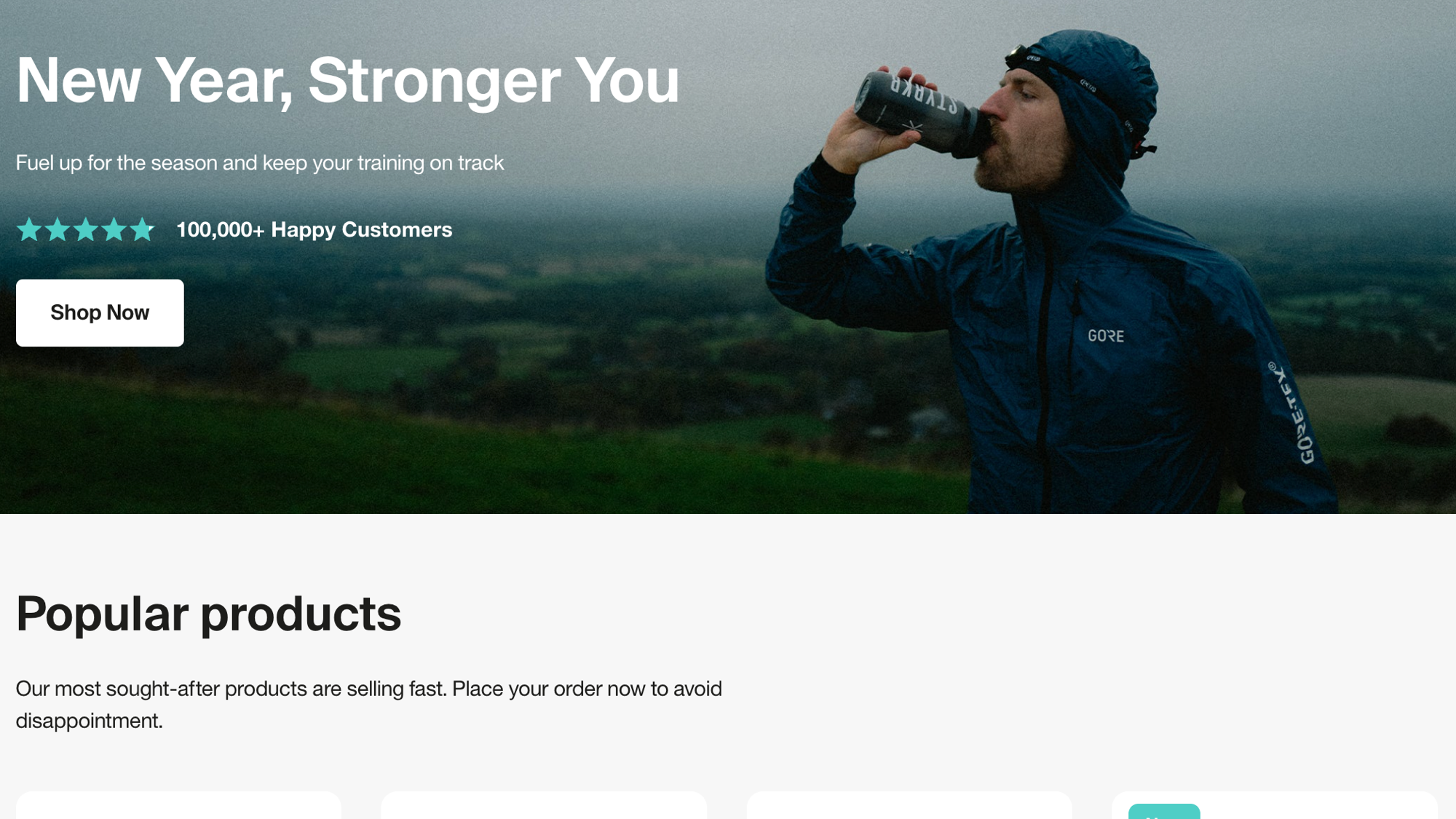
STYRKR: Google Ads audit and London Marathon campaign for a sports nutrition brand
Auditing tracking, cutting wasted ad spend, and launching a seasonal campaign around London Marathon demand. First month: +21% ad clicks and +22% combined organic and paid visibility.
Client: STYRKR
Site: styrkr.com
Scope: Google Ads management, data analytics and attribution, market opportunity analysis, landing page optimisation
The situation
STYRKR is a DTC sports nutrition brand on Shopify, selling energy gels, electrolytes, and recovery products. Google Ads were running, but the account hadn't been audited recently. I joined in early March 2026 to review the setup, identify where spend was being wasted, and look for growth opportunities.
The audit
Three areas needed attention.
The data layer had duplicate tracking tags across Google Ads, Tag Manager, and a third-party product feed app. This was inflating conversion data and giving the bidding algorithm inaccurate signals. Consolidating to a single tracking setup and migrating the product feed to Shopify's native Google channel fixed the foundation. It also unlocked localised Google Shopping across multiple markets.
Spend was leaking to irrelevant search terms and unrelated brands. Ad copy and landing pages were misaligned in places, with headlines promoting one product category appearing for searches in another. Restructuring the affected ad groups and matching copy to the correct collection pages tightened relevance across the account.
And there was a seasonal opportunity sitting uncaptured.
London Marathon campaign
Spring is peak season for running gel demand. Search volumes run well above annual average through March and April, and athletes tend to purchase gels well weeks before race day. STYRKR already ranked well organically for marathon nutrition queries, but had no dedicated paid coverage for non-brand gel terms.
I launched a new search campaign in March, targeting running gel, energy gel, and marathon nutrition intent. Ad copy was built around product specifics. Landing pages pointed directly to the energy gels collection. The aim was dual visibility: paid capturing high-intent traffic while organic held its existing positions.
Beyond the spring peak, the campaign was designed to transition into electrolyte and hydration terms as summer demand picks up.
First-month results
Performance summary for 16 March to 12 April 2026, compared to the prior four-week period.


Clicks grew across all campaigns, with the seasonal campaign as the top contributor. Conversion value also increased across the account.
These changes are about a month old. The tracking and relevance fixes are the kind that tend to improve as the bidding algorithm works with cleaner signals, but it's too early to measure that effect.
Scope
Ongoing fractional management: data analytics and attribution, Google Ads campaign planning and buying, market opportunity analysis, and landing page optimisation.


